


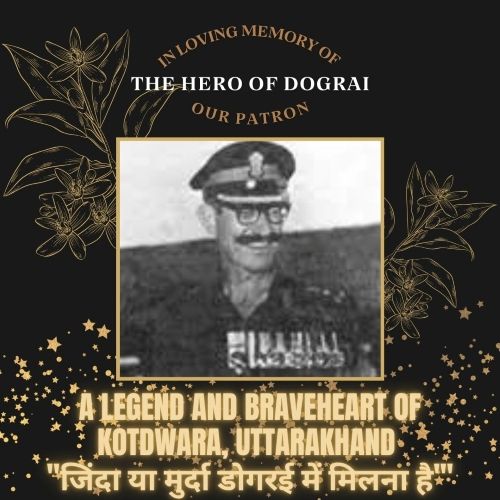
Brigadier Desmond Hayde was born in Exeter, UK, on 28th Nov 1926.
He was of Anglo-Indian family of Irish descent and his father Walter Driscol Hayde served with the British artillery for 21 years and finally worked in the Indian Railways till retirement. He was educated up to Senior Cambridge at St Vincent's School, Asansol (West Bengal).

Brigadier Desmond Hayde was an officer in the Indian Army. He was the commanding officer of the 3rd battalion of the Jat Regiment during the Indo-Pak War of 1965. He led his battalion of 550 men and defeated an enemy force that was double the size of his own battalion. On 6th September 1965, when the initial attack on the lchhogil Canal in Pakistan was launched, Lieutenant Colonel Hayde captured the western bank of the canal against very stiff enemy opposition.
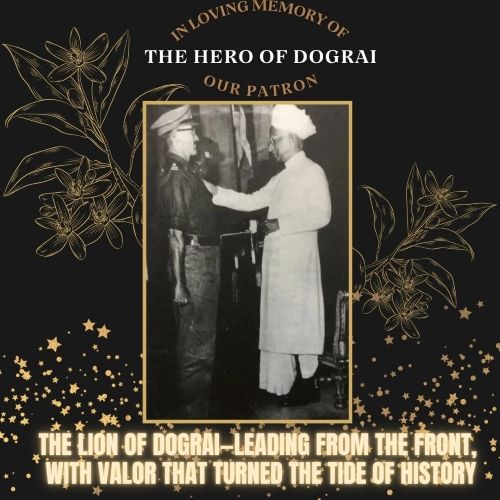
It was primarily due to his leadership that not only did his battalion not fall back from the positions which it had occupied, but in fact moved forward in spite of continuous and heavy shelling and frequent air and ground attacks. Lieutenant Colonel Desmond Hayde was awarded the Mahavir Chakra, the second highest honour in war-time, for winning one of the toughest battles ever fought by the Indian Army.
Brig. Hayde is also perhaps the only soldier to be painted by the famed M. F. Hussain on the battlefield.

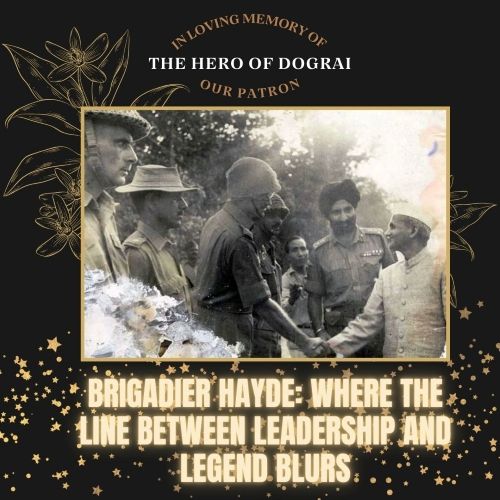
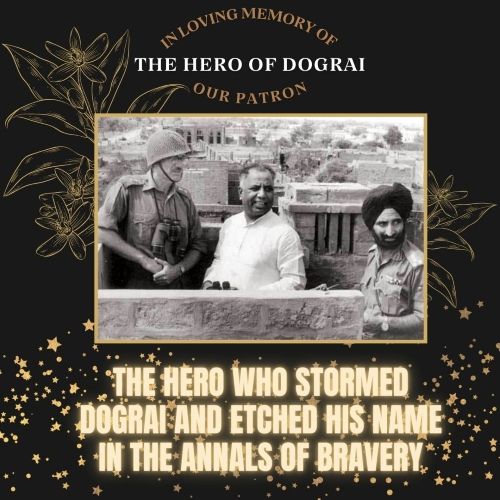
On the night of 21 September 1965, during the impending attack on Dograi, Hayde made two demands of his men:
Not a single man will turn back!
एक भी आदमी पीछे नहीं हटेगा
Dead or alive, we have to meet in Dograi.
ज़िंदा या मुर्दा डोगराई में मिलना है
This was drilled into the soldiers’ heads so clearly that when Colonel Hayde asked a young soldier in a bunker on the eve of the attack:
What would you do if your CO is injured during the fight?
ससुरे, अगर सीओ साहब ज़ख्मी हो गए तो क्या करोगे?
I will carry the CO to Dograi because he has ordered everyone to get there, dead or alive!
सीओ साहब को उठाकर डोगराई ले जाएंगे क्योंकि सीओ साहब का हुक्म है कि ज़िंदा या मुर्दा डोगराई में मिलना है।
A pleased Colonel Hayde gave him a pat on the shoulder moved on to the next bunker.

Gazette Notification: 125 Pres/65, The 17th September 1965
Date of Award: 6th Sept 1965
On 6th September, 1965, when the initial attack on the Ichhogil Canal in Pakistan was launched, Lt. Colonel Hayde, an officer Commanding of a battalion of Jat Regiment, captured the western bank of the canal against very stiff enemy opposition. It was primarily due to his leadership that not only did his battalion not fall back from positions which it had occupied, but in fact moved forward in spite of continuous and heavy shelling and frequent air and ground attacks.
On 9th September, 1965, when the enemy launched an attack with Patton and Sherman tanks, his battalion accounted for five of the enemy tanks. The performance of this battalion though out the operations was excellent and this was largely due to the great personal courage and exceptional qualities of leadership shown by Lt. Colonel Desmond Hayde.